Results may vary depending on your particular facts and legal circumstances.
BOATING ACCIDENT LAWYER IN NEW YORK CITY
Busy waterways around New York City leave little room for error. When negligent boat operators cause preventable accidents, Morgan & Morgan represents victims seeking accountability and compensation.
Results may vary depending on your particular facts and legal circumstances.




















New York City Boating Accident Attorney
New York City is surrounded by water, from the Hudson River and East River to New York Harbor. With heavy commercial traffic, ferries, recreational boaters, and tourism, these waterways can become congested and, at times, dangerous. Even experienced operators can make critical mistakes, and when they do, the consequences can be serious.
Boating accidents in New York City often involve factors like operator inattention, excessive speed, equipment failure, or boating under the influence. In some cases, accidents may also involve rental companies, tour operators, or commercial vessels, adding another layer of complexity. No matter how the incident occurs, you shouldn’t have to deal with the aftermath of someone else’s negligence on your own.
At Morgan & Morgan, our attorneys understand the challenges that come with boating and maritime injury cases. From navigating federal maritime laws to investigating operator negligence, we work to build strong claims for those injured on the water. If you were hurt in a boating accident in New York City, our team can help evaluate your case and determine your next steps. Contact us today to learn more.
- 700,000+ clients Chose Morgan & Morgan Nationwide.
- $0 upfront Only pay if we win.
- Available 24/7 Get help anytime.
Boating Accident Cases in New York City Need Three Things
Another Party May Be Responsible
The Accident Caused an Injury
You Suffered Losses
Talk to Our Team at No Cost
150,000+ Five Star Reviews
The reasons why clients trust Morgan & Morgan.





Results may vary depending on your particular facts and legal circumstances. Based on select nationwide reviews.
What are the common causes of boating accidents in New York City?
Boating accidents can happen for a range of reasons, but many are linked to human error. Factors like inexperience, distraction, or negligence often play a role, making these incidents largely preventable. If you're pursuing a boating accident claim in New York City or looking to understand the risks better, it’s useful to be familiar with the most common causes.
Operator Inattention
One of the leading causes of boating accidents is simply not paying attention. Whether the operator is distracted by passengers, devices, or the scenery, failing to maintain awareness of surroundings can lead to collisions, groundings, or other serious incidents.
Operator Inexperience
Boating requires skill, judgment, and familiarity with navigation rules. An inexperienced operator may not know how to react in an emergency, handle rough waters, or give the right-of-way, leading to dangerous situations.
Speeding or Reckless Operation
Just like on the road, speed kills on the water. Traveling too fast can make it harder to avoid obstacles, stop in time, or navigate safely, especially in crowded areas or unfamiliar waters.
Boating Under the Influence (BUI)
Operating a boat while under the influence of alcohol or drugs is illegal and highly dangerous. Impaired judgment, slowed reflexes, and poor decision-making often contribute to serious accidents—and fatalities.
Weather Conditions
Sudden storms, strong winds, fog, or rough waters can quickly turn a pleasant day into a disaster. While the weather can be unpredictable, experienced boaters should always check forecasts and know when to head back to shore.
Equipment Failure
Mechanical failures, including engine problems, steering issues, or electrical malfunctions, can lead to accidents. These issues are often caused by inadequate maintenance or faulty components, and liability may fall on the manufacturer or rental company in certain situations.
Failure to Keep a Proper Lookout
Every boat operator is responsible for keeping a lookout for swimmers, other boats, obstacles, and changes in water conditions. Failing to do so increases the risk of collision or injury.
Overloading the Boat
Every vessel has a weight limit. Overloading with too many passengers or too much gear can affect the boat’s stability, cause it to capsize, or make it harder to control.
Ignoring Navigation Rules
Just like cars follow traffic laws, boats must follow specific maritime rules, like yielding, using proper lighting at night, and staying in designated channels. Ignoring these rules often leads to crashes.
Wake Damage and Swamping
Large wakes generated by speeding boats can capsize smaller vessels or cause passengers to be thrown overboard. Boat operators have a duty to control their wake, particularly near marinas and other vessels.
What are the most common types of boating accidents in New York City?
Boating accidents can lead to a wide range of injuries, from minor cuts and bruises to life-altering trauma or even death. The severity often depends on the type of accident, whether it’s a collision, capsizing, fire, or someone being thrown overboard. Common injuries can include:
Traumatic Brain Injuries (TBI)
Head injuries frequently occur when individuals are thrown against hard surfaces or struck by debris during a crash or capsizing. In serious cases, a head injury can lead to a concussion or lasting brain damage.
Spinal Cord Injuries
Sudden impact or falls can lead to serious damage to the spinal cord, potentially resulting in partial or full paralysis. These injuries often require extensive medical treatment and long-term care.
Broken Bones
The force of a boating collision or being thrown onto a hard deck or into the water can easily cause fractures. Commonly broken bones include arms, legs, ribs, and facial bones.
Lacerations and Deep Cuts
Sharp objects, propeller blades, broken glass, or jagged edges on a damaged boat can cause severe cuts that may require stitches, surgery, or leave permanent scars.
Burns
Fires and explosions from fuel leaks, engine malfunctions, or electrical issues can cause serious burn injuries. Burns can be painful, disfiguring, and often require skin grafts and long-term treatment.
Drowning and Near-Drowning
Drowning is one of the most tragic and common outcomes in boating accidents, especially when passengers aren’t wearing life jackets. Near-drowning can also result in brain damage due to a lack of oxygen.
Hypothermia
Prolonged exposure to cold water can result in hypothermia. In freezing conditions, even strong swimmers can lose coordination and clarity, which raises the risk of drowning.
Whiplash and Soft Tissue Injuries
Sudden stops or collisions can cause neck, back, and soft tissue injuries similar to those seen in car accidents. These may include sprains, strains, and herniated discs.
Internal Injuries
A violent crash can cause blunt force trauma that leads to internal bleeding or damage to organs. These injuries are often hard to detect at first and may require emergency medical attention.
Emotional Trauma and PTSD
Beyond physical injuries, survivors of boating accidents, especially those involving serious injury or loss of life, can suffer lasting emotional trauma, anxiety, or post-traumatic stress disorder.
Can I file a claim if a loved one drowned in a New York City boating accident?
Yes, in some situations, surviving family members may be able to file a wrongful death claim if a loved one drowned in a boating accident. Drowning is one of the leading causes of death in boating incidents, and in many cases, it is preventable. For example, liability may arise if:
- Proper life jackets were not available or maintained
- The boat operator acted negligently or recklessly
- Safety regulations were ignored
- The victim was thrown overboard due to unsafe operation
Boat owners and operators have a responsibility to provide basic safety equipment and operate their vessels responsibly. If that duty is breached and results in a fatality, a wrongful death claim may help families recover compensation for funeral expenses, loss of financial support, and emotional losses.
Do I need a lawyer for a boating accident in New York City?
While not every boating accident requires a lawyer, having one can be important in many situations. Whether you’ve been injured, experienced property damage, or are being held responsible, an attorney can help protect your rights and prevent you from covering someone else’s losses. Here’s when you should definitely consider hiring a lawyer after a boating accident in New York City:
Someone was injured
Boating accidents often involve serious injuries, and medical bills can pile up quickly. A lawyer can help you pursue compensation for:
- Medical expenses
- Lost wages
- Pain and suffering
- Ongoing care needs
There’s significant property damage
If boats or other property were damaged, insurance companies may try to pay out as little as possible or deny the claim altogether. An attorney can negotiate with insurers and help you get the compensation you're entitled to.
The fault is unclear or being disputed
If there’s a dispute over who caused the accident or multiple parties are involved, a lawyer can investigate, gather evidence, and help ensure you’re not held responsible unfairly.
The accident involved a rental or commercial vessel
Incidents involving rental vessels or commercial operators are often more complicated, potentially involving company liability or third-party responsibility. An attorney can guide you through contracts, waivers, and insurance matters.
You're being sued or threatened with legal action
If another party is holding you responsible or you’re being named in a lawsuit, getting legal help is essential to protect your rights and finances.
When You Might Not Need a Lawyer
- The accident was minor and involved no injuries
- Everyone agrees on what happened
- Insurance is covering the damage and medical costs without issue
Even in these situations, it’s smart to consult a lawyer just to be safe. Morgan & Morgan offers free case evaluations and works on a contingency basis, so you don’t pay anything unless they recover money for you.
What can a boating accident lawyer do for my New York City case?
A boating accident lawyer can handle many aspects of your claim so you can focus on your recovery. Depending on the circumstances, an attorney may:
- Investigate the accident and gather evidence
- Obtain accident reports, photos, and witness statements
- Work with medical professionals to document your injuries
- Identify all potentially responsible parties
- Handle communication with insurance companies
- Help preserve important evidence, including damaged equipment
- Consult with experts, such as accident reconstruction specialists or economists
- Pursue a settlement or prepare your case for trial
Boating accident cases can involve complex maritime laws and multiple parties. Having legal representation can help ensure your claim is properly evaluated and supported.
Can Morgan & Morgan in New York City handle jet ski accident claims?
Yes. Jet ski accidents are a frequent type of boating-related injury claim and can be particularly serious because riders have less protection. These cases may involve several potentially liable parties, including:
- The jet ski operator
- Another boat operator
- A rental company
- A manufacturer or retailer (in cases involving defective equipment)
Jet ski accidents often happen quickly and can result in severe injuries, including head trauma, spinal injuries, or propeller-related harm. Because of the complexity of these claims, it’s important to work with a legal team that understands both personal injury law and the unique risks involved in recreational watercraft accidents.
How do I prove fault or negligence in a boating accident in New York City?
Proving fault in a boating accident typically comes down to showing that another party acted negligently, meaning they failed to operate their vessel safely and caused your injuries or damages. Because boating accidents often involve maritime laws and less structured environments than roadways, establishing fault can require a detailed investigation.
To build a strong claim, you generally need to prove four key elements of negligence:
Duty of Care
Boat operators have a responsibility to act reasonably and safely, follow navigation rules, maintain proper equipment, and watch out for others on the water.
Breach of Duty
You must show that the other party failed to meet that responsibility. This could include:
- Speeding or reckless operation
- Operating under the influence of drugs or alcohol
- Failing to keep a proper lookout
- Ignoring navigation rules or right-of-way
- Overloading the vessel or lacking the required safety equipment
Causation
You must demonstrate that the other party’s actions directly caused the accident and your injuries. For example, if an operator was impaired and caused a collision, that impairment may be the cause of your harm.
Damages
You must have suffered measurable harm, such as:
- Medical expenses
- Lost wages
- Pain and suffering
- Property damage
What evidence can help prove fault?
Strong evidence is critical in boating accident cases. If possible, try to gather and preserve:
- Photos or videos of the scene, damage, and injuries
- Names and contact information of everyone involved
- Witness statements
- Weather and water condition details at the time of the accident
You should also obtain an official boating accident report from local authorities or the U.S. Coast Guard. These reports often include key details about the incident and may note any citations for violations such as speeding or boating under the influence.
Medical records, repair estimates, and receipts can also help demonstrate the extent of your injuries and financial losses.
Do I need expert help to prove fault?
In more complex cases, expert testimony may be used to strengthen your claim. Attorneys may work with:
- Maritime accident reconstruction specialists
- Medical professionals
- Economic experts
A boating accident lawyer can investigate the incident, identify all responsible parties, and handle negotiations with insurance companies to help build a strong case on your behalf.
What types of damages are available in boating accidents in New York City?
In a boating accident claim, the types of damages you can recover depend on the circumstances of the accident, such as the severity of injuries, property damage, and who was at fault. Damages are generally divided into two categories: economic (or special) damages and non-economic (or general) damages. In rare cases, punitive damages may also apply.
Economic Damages (Financial Losses)
These cover the direct, out-of-pocket costs that result from the accident:
- Medical Expenses
- Emergency room visits
- Surgeries
- Hospital stays
- Prescription medications
- Physical therapy or rehabilitation
- Future medical care (if ongoing treatment is needed)
Lost Wages
- Income lost due to time off work during recovery
- Future loss of earning capacity if you’re unable to return to your job or work at full capacity
Property Damage
- Costs to repair or replace your boat or other personal property damaged in the accident
- Damage to equipment or gear, including electronics, fishing equipment, or safety devices
Out-of-Pocket Expenses
- Travel for medical care
- Modifications to your home or vehicle due to injury
- Help with household chores if you're temporarily or permanently disabled
Non-Economic Damages (Intangible Losses)
These compensate you for the emotional and physical effects of the accident:
Pain and Suffering
Covers physical pain and emotional distress resulting from the accident.
Emotional Distress/Mental Anguish
If you suffer from anxiety, PTSD, or depression due to the accident, you may be entitled to compensation.
Loss of Enjoyment of Life
If your injuries prevent you from participating in activities you once enjoyed—like boating, swimming, or other hobbies.
Loss of Consortium
Compensation for the impact the injuries have on your relationship with your spouse or family.
Punitive Damages (in Rare Cases)
These are awarded in cases involving extreme recklessness, gross negligence, or intentional harm, like a boat operator who was heavily intoxicated or deliberately caused a collision.
Punitive damages are meant to punish the wrongdoer and deter similar behavior in the future.
Wrongful Death Damages
If a loved one died in a boating accident, surviving family members may be able to pursue a wrongful death claim, which could include:
- Funeral and burial expenses
- Loss of financial support
- Loss of companionship
- Pain and suffering of the deceased before death
Will my New York boating accident lawyer file a lawsuit if needed?
If necessary, yes. A boating accident lawyer can file a lawsuit on your behalf and represent you throughout the legal process. Many boating accident claims are resolved through settlement negotiations. However, if a fair agreement cannot be reached, your attorney may:
- File a formal complaint in court
- Present evidence supporting your claim
- Engage in the discovery process
- Represent you during hearings or a trial
Strong legal representation includes preparing every case as if it may go to trial. This approach can also strengthen your position during settlement discussions.
Do I have to pay for a consultation with a lawyer in New York City?
No. Consultations at Morgan & Morgan are completely free. We believe everyone deserves access to legal advice, regardless of their financial situation.
Hiring one of our lawyers is easy, and you can get started in minutes with a free case evaluation on our site or by phone.
Who will be on my New York City case team?
When you hire Morgan & Morgan, you get more than just a single attorney; you get the support of America’s Largest Injury Law Firm, with 1,100 attorneys and offices across the country.
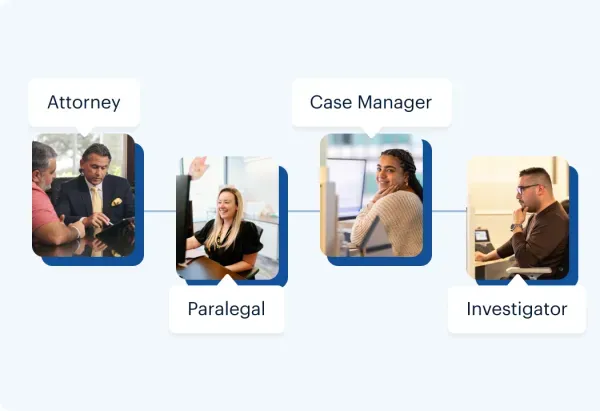
Your case will be managed by a dedicated team that may include a personal injury attorney, case manager, paralegals, and support staff. A primary attorney will lead your case, with a care team helping to keep it progressing and ensuring that you stay updated along the way.
This team-based approach allows your case to receive the attention it needs while making sure you have consistent communication and support throughout the process.
When do I meet with my lawyer in New York City?
We love talking to our clients. You will primarily communicate with your Case Manager via telephone and email, and if you would like to speak directly with your attorney via telephone, we will make that happen by scheduling a call.
How much does it cost to hire Morgan & Morgan in New York City?
Morgan & Morgan’s lawyers work on a contingency fee basis, meaning that there are no upfront fees or expenses until your case comes to a successful conclusion. That’s right—the Fee Is Free™, and you only pay if we win.
Our fee is a percentage of the settlement or verdict amount, ensuring we are motivated to achieve the best possible outcome for you.
What should I look for in a boating accident lawyer in New York City?
Choosing the right boating accident lawyer can make a significant difference in your case. When evaluating your options, consider the following:
- Experience handling boating or maritime injury cases
- Knowledge of federal and state boating regulations
- Strong track record of case results
- Trial experience, if your case goes to court
- Positive client reviews from multiple sources
- Clear communication and willingness to answer your questions
- A contingency fee structure with no upfront costs
It’s also helpful to schedule a consultation and ask questions about the attorney’s experience, strategy, and approach to handling cases like yours. Finding a lawyer you feel confident in can help you move forward with greater peace of mind.
Why should I hire Morgan & Morgan in New York City for my boating accident case?
At Morgan & Morgan, our team of experienced attorneys has successfully represented countless clients in similar situations, securing millions in compensation. As the largest personal injury law firm in the country with 1,100 lawyers nationwide, we have the resources, knowledge, and dedication to fight for your rights.
We work on a contingency fee basis, meaning you won’t have to pay unless we win your case. Morgan & Morgan believes justice should be accessible to all, so our motto is the Fee Is Free™—you only pay if we win.
Don’t bear the burden of your injuries on your own because of someone else’s negligence. Contact Morgan & Morgan today for a free case evaluation to learn more about your legal options.
Our Results
How It Works
Unsure what to do next? With 35 years of experience, our personal
injury lawyers will guide you every step of the way.

Contact Us 24/7 - It’s Free
Start your claim
Meet your dedicated attorney
Meet the attorneys

We fight for more
Learn more about the case process
Results may vary depending on your particular facts and legal circumstances. The attorneys shown in these photos may not be licensed in your state. To find an attorney licensed in your area, please visit our attorney page.
Local Care
Backed by America’s Largest Injury Law Firm.
- $35 BillionRecovered for clients
nationwide - 700,000+Clients and families
served - 1,100+Attorneys across
the country - 1Click may change your life
We know your pain.
John Morgan’s brother Tim was injured as a teen. Their experience with a lawyer was a nightmare. John spent 35 years building a firm to do better for families like his. And yours.

The attorney featured above is licensed in Florida. For a full list of attorneys in your state please visit our attorney page.
Results may vary depending on your particular facts and legal circumstances.
Learn More
Injured and not sure what to do next?
We'll guide you through everything you need to know.
