Results may vary depending on your particular facts and legal circumstances. The attorney featured above is licensed in Florida. For a full list of attorneys in your state please visit our attorney page.
VETERANS DISABILITY LAWYER IN LITTLE ROCK
Little Rock veterans wrongly denied benefits for service-connected conditions deserve experienced legal support. The attorneys at Morgan & Morgan help with appeals and work to recover the compensation earned through military service.
Results may vary depending on your particular facts and legal circumstances. The attorney featured above is licensed in Florida. For a full list of attorneys in your state please visit our attorney page.




Little Rock Veterans Benefits
- 700,000+ clients Chose Morgan & Morgan Nationwide.
- $0 upfront Only pay if we win.
- Available 24/7 Get help anytime.
150,000+ Five Star Reviews
The reasons why clients trust Morgan & Morgan.






Results may vary depending on your particular facts and legal circumstances. Based on select nationwide reviews.
How do I know if I qualify for Veterans' disability benefits in Little Rock, Arkansas?
To qualify for disability benefits from Veterans Affairs (VA) in Little Rock, Arkansas, an applicant must meet four basic requirements:
- They must be a Veteran.
- They must have a current medical condition.
- There must have been some sort of in-service event or incurrence.
- There must be a medical nexus between the current medical condition and the in-service event/incurrence.
Securing disability benefits often depends on proving that the injury or condition is service-related.
How do I apply for VA disability benefits in Little Rock, Arkansas?
Applying for VA disability benefits involves several steps. Veterans must follow a process that includes gathering necessary documentation, filling out the correct forms, and submitting them to the VA.
We strongly urge Veterans and survivors to work with an accredited Veteran Service Officer to submit their initial claims for benefits. VSOs are entirely free. Avoid any type of “coaches” or “consultants” that charge you for providing “guidance” on filing your claims, often in concert with their own medical offices. We call these “Claim Sharks.”
Charging fees contingent on success for that sort of work is not legal, and no one can assist you with a claim or appeal if they are not accredited by the VA Office of General Counsel. The application process generally includes the following steps:
Gather Necessary Documentation
Before submitting a claim, Veterans need to gather important documents that support their disability claim. This may include:
- Military service records (DD214)
- Medical records documenting the disability
- Doctor’s statements that link the disability to military service
- Statements from fellow Veterans or individuals who witnessed the injury or event
Complete the VA Disability Claim Forms
Veterans must fill out VA Form 21-526EZ, which is the standard application for new disability benefits. In some cases, additional forms might be required, depending on the nature of the claim. If a claim was previously decided, either a VA Form 20-0995 Supplemental Claim or a 20-0996 Higher Level Review will be necessary.
Submit the Application
Once the forms are completed, Veterans can submit their applications online via the VA’s website, by mail, FAX, or in person at a VA Regional Office.
Wait for the VA’s Decision
After submission, the VA will review the application, and Veterans will be notified of their decision. This process can take several months, so Veterans should track the status of their claims through the VA’s online portal or by contacting the VA directly.
Why were my Veterans benefits denied in Little Rock, Arkansas?
There are several common reasons why Veterans' disability claims are denied. Understanding these reasons can help prevent mistakes during the application process.
- Insufficient evidence: One of the most frequent reasons for denial is a lack of medical evidence connecting the Veteran’s disability to their service. Veterans must provide strong documentation to show the injury or illness occurred during their military service.
- Missed deadlines: Veterans must submit their claims within specific time frames. Missing a filing deadline can result in the loss of benefits or delay the approval of the claim.
- Failure to prove service connection: To qualify for VA disability benefits, Veterans must prove that their condition was caused or aggravated by their military service. If this link is not clear, the VA may deny the claim.
- Inadequate medical examinations: The VA may require a Compensation and Pension (C&P) exam to assess the severity of a Veteran's disability. Failing to attend this exam can result in a denial of benefits.
How do I appeal a denied VA benefits claim in Little Rock, Arkansas?
If a Veteran’s disability claim is denied, they have the right to appeal. The appeals process can be lengthy and complex, but it’s crucial to understand the steps involved.
- File a supplemental claim with new and relevant evidence. A new theory qualifies for an appeal, along with new and relevant evidence.
- File a higher-level review. With or without an informal conference with a Decision Review Officer, file for a higher-level review. A more experienced adjudicator will review the claim and make a new decision.
- Appeal to the Board of Veterans’ Appeals. Choose either Direct Review (with a closed record), Evidence Submission (with 90 days to submit additional evidence and a closed record thereafter until a decision is made), or Hearing Lane (in which you can testify before the judge as well as submit additional evidence after the hearing).
You don’t have to face the appeals process alone; contact Morgan & Morgan in Little Rock, Arkansas, to help maximize your chances of recovering the benefits you need and deserve.
How do VA disability compensation ratings work in Little Rock, Arkansas?
The VA assigns disability ratings on a scale from 0% to 100%, in increments of 10%. These ratings determine the amount of monthly compensation a Veteran will receive. A higher rating means higher compensation.
- Single disability ratings: Veterans with a single disability will receive compensation based on their rating.
- Multiple disabilities: When a Veteran has more than one disability, the VA combines the ratings using a special formula. This method doesn’t simply add the percentages together, meaning a Veteran with multiple disabilities may receive higher overall compensation than if the ratings were added directly.
Do I need a lawyer for my VA disability benefits claim in Little Rock, Arkansas?
Navigating the VA’s disability benefits process can be challenging, which is why it’s beneficial to have experienced legal representation. A Veterans' benefits attorney can help:
- Ensure accuracy: Attorneys can assist with ensuring that all forms are filled out correctly and that the claim is fully supported by the necessary evidence.
- Increase approval chances: With expert knowledge of VA rules and regulations, an attorney can help identify potential issues with a claim and increase the likelihood of approval.
- Maximize compensation: Lawyers can help Veterans maximize their disability compensation by ensuring all eligible disabilities are accounted for and rated accurately.
At Morgan & Morgan, we have a dedicated team of attorneys experienced in handling Veterans' disability claims. Our attorneys will guide you through the entire process, from application to appeals, ensuring you get the benefits you deserve.
What types of disabilities qualify for VA benefits in Little Rock, Arkansas?
The U.S. Department of Veterans Affairs (VA) provides disability benefits for a wide range of physical and mental health conditions that are related to a Veteran's military service. Some of the most common types of disabilities that qualify for VA benefits include:
Physical Injuries
- Combat-related injuries: Injuries sustained in combat, such as gunshot wounds, shrapnel injuries, and burns.
- Musculoskeletal injuries: Conditions like back pain, joint pain, or amputations caused by accidents or overuse during service.
- Head injuries: Traumatic brain injuries (TBI) or concussions from blasts or other incidents during military service.
- Hearing loss: Often due to exposure to loud noises like gunfire, explosions, and heavy machinery.
- Vision loss: Damage to eyesight resulting from injuries, including blindness or reduced vision.
Mental Health Conditions
- Post-traumatic stress disorder (PTSD): A condition that develops after experiencing traumatic events during military service.
- Anxiety and depression: These conditions can be service-connected if they are linked to military experiences.
- Mental health disorders related to military service: This includes conditions like bipolar disorder or mood disorders that may have been triggered or exacerbated during service.
Chronic Illnesses and Diseases
- Chronic pain: Pain from long-term injuries or conditions that developed during military service.
- Cancer: Certain types of cancer, particularly those related to exposure to harmful substances like Agent Orange, burn pits, or asbestos, may qualify for VA benefits.
- Respiratory conditions: Diseases like asthma, chronic obstructive pulmonary disease (COPD), or other lung diseases related to service in certain environments (exposure to smoke or chemicals).
Exposure-Related Conditions
- Agent Orange exposure: Veterans who served in Vietnam or certain other regions and were exposed to Agent Orange may qualify for benefits for conditions linked to the herbicide, such as certain cancers, diabetes, or heart disease.
- Toxic substance exposure: Veterans exposed to asbestos, radiation, or other harmful chemicals during service may qualify for benefits for conditions like lung cancer, mesothelioma, and other related diseases.
Other Service-Connected Disabilities
- Infectious diseases: Conditions such as malaria, tuberculosis, or other diseases contracted during service may qualify for benefits.
- Diseases related to environmental hazards: Veterans who served in environments with toxic pollutants or extreme conditions, such as those involved in the Gulf War, may be eligible for benefits due to specific conditions linked to their service.
To qualify for VA disability benefits, Veterans must prove that their disability is service-connected, meaning it was caused or aggravated by their time in military service. Documentation such as medical records, service records, and lay statements from fellow Veterans or family members can help support the claim.
How long does it take to receive a decision on my VA disability claim in Little Rock, Arkansas?
The average time to process a claim is several months, but it can take longer depending on the complexity of the case.
The VA has a goal of 120 days to work on each new claim, but the clock starts over each time you resubmit for the same condition. For instance, if you file an initial claim, get denied in 120 days, then file a Supplemental Claim, get denied again in 120 days, and then file a Higher Level Review where you finally get granted in 120 days, 360 days have passed at that point.
Appealing to the Board of Veterans Appeals currently can take up to four years—so your attorney may only use that as a last resort.
To get a clearer picture regarding the details of your unique case, simply contact Morgan & Morgan for a free case evaluation.
Can I receive VA benefits for a disability that was diagnosed after I left the military in Little Rock, Arkansas?
Yes, Veterans can receive benefits for disabilities that manifest after military service, as long as they can prove the condition is linked to their service. An attorney can help you conduct the investigation necessary to gather all necessary documents and evidence.
What is the difference between a VA disability claim and a VA pension in Little Rock?
The VA disability claim and the VA pension are both forms of assistance provided by the U.S. Department of Veterans Affairs (VA), but they serve different purposes and are intended for Veterans in different situations. Here’s a breakdown of the key differences:
VA Disability Claim
A VA disability claim is for Veterans who have a service-connected disability—meaning the condition was caused or aggravated by their time in the military. This includes physical injuries, mental health conditions (such as PTSD), and diseases that are linked to military service.
Key elements may include:
- Eligibility: Available to Veterans with disabilities resulting from their military service.
- Disability rating: Veterans receive a disability rating (from 0% to 100%) based on the severity of their condition. The rating determines the amount of monthly compensation the Veteran will receive.
- Service connection: Veterans must prove their disability is service-connected, meaning it was caused or made worse by their military service.
- Compensation: Veterans receive monthly financial compensation based on their disability rating. The higher the rating, the higher the compensation.
- Medical care: In addition to financial compensation, Veterans may also be eligible for VA healthcare services related to their service-connected condition.
VA Pension
A VA pension is a needs-based benefit available to Veterans with limited income and net worth, who are either disabled or age 65 and older, and who have served during wartime. This benefit is not based on a service-connected disability but on financial need and wartime service.
Key elements may include:
- Eligibility: Available to Veterans who have low income, are over age 65, or are permanently and totally disabled, regardless of whether the disability is related to their military service. The Veteran must have served during a recognized wartime period.
- Income limits: The pension is designed for Veterans with low income and net worth. The VA sets income thresholds that determine eligibility.
- No service connection required: Unlike the disability claim, the VA pension does not require the disability to be service-connected. It’s based on financial need and wartime service.
- Pension amount: The pension provides a set monthly amount based on the Veteran's income, living situation, and whether they have dependents. It’s intended to help Veterans who are financially struggling.
- Medical care: Veterans receiving a pension may be eligible for VA healthcare services, but the pension itself is not tied to service-connected conditions.
How do I prove that my injury or illness is service-connected in Little Rock, Arkansas?
Proving that an injury or illness is service-connected is a crucial part of a VA disability claim. To successfully demonstrate that your condition is connected to your military service, you'll need to provide sufficient evidence to meet the VA’s requirements. Here's a step-by-step guide on how to prove your injury or illness is service-connected:
1. Gather Your Service Records
Your military service records are essential in showing when and where you served, as well as any specific incidents that could have caused or contributed to your injury or illness. This can include:
- DD Form 214 (Certificate of Release or Discharge from Active Duty): This form outlines your service, including dates, locations, and type of discharge.
- Service treatment records: These documents provide a history of your medical treatment while in the military, which may include injuries or illnesses sustained during service.
- Personnel records: These can include information about your assignments, duties, or exposure to hazardous environments that may be relevant to your claim.
2. Provide Medical Evidence of the Condition
The next critical step is proving that you have the injury or illness you're claiming. You’ll need to present medical records, such as:
- Diagnosis: Medical documentation from a doctor or healthcare provider that confirms your condition. This can include diagnoses of injuries, diseases, mental health conditions (like PTSD), or chronic illnesses.
- Medical records: Copies of any post-service medical records that show the treatment or ongoing care for your condition.
- Treatment history: Documentation of any treatments or medications related to the condition. If the illness or injury occurred after your service but is linked to your military experience (exposure to toxic substances), showing that the condition is now being treated is important.
3. Provide Evidence of a Service Connection
The VA will look for a clear link between your military service and your condition. There are several ways you can establish this:
- In-service documentation: If your condition was documented during your time in service (a hospital visit or report of injury), this can directly show a connection.
- Lay statements: Statements from you or others (fellow service members, family members, or friends) that describe the onset of the condition, including any incidents, accidents, or exposure to hazardous situations during service that could have led to the condition. These statements can also help establish a timeline of events.
- Exposure or events: If your condition is related to a specific event, such as a combat injury, exposure to Agent Orange, or other environmental hazards, you may need to provide details of that exposure. For example, if you were in a war zone, you could provide evidence of being in an area known for exposure to toxins or hazardous materials.
- Any regulatory presumptions: In some cases, the VA recognizes certain conditions as presumptively service-connected, meaning Veterans do not need to provide direct evidence linking their condition to their military service. Instead, if a Veteran meets specific eligibility criteria, such as serving in a designated location or time period, the VA assumes the condition was caused by service.
4. Use Medical Nexus Statements
A nexus letter is a medical opinion written by a qualified doctor that explains how your condition is linked to your military service. The letter should include:
- A clear medical opinion: The doctor must specifically state that your condition is "more likely than not" related to your service, based on their professional expertise and review of your medical history and service records.
- Rationale: The doctor must explain why they believe your condition is connected to your military service, whether it’s due to injury, exposure, or psychological factors (such as PTSD from combat).
5. Consider Secondary Service Connection
Sometimes, conditions may not have directly resulted from your military service, but they may have been caused or aggravated by a service-connected condition. For example:
- Secondary conditions: If you developed a mental health disorder due to an injury, or a new illness developed as a result of a service-connected condition (developing arthritis as a result of a service-related injury), you can apply for secondary service connection.
Be sure to provide medical evidence and documentation showing how the secondary condition was caused or worsened by your service-connected disability.
6. File Your Claim With the VA
Once you’ve gathered your evidence, file a disability claim with the VA. Be thorough when completing the claim form, as the more information you provide upfront, the better the chances of a favorable outcome.
- VA Form 21-526EZ: This is the standard form used to apply for disability benefits. Use this for filing claims that have never been filed before or for increases in already service-connected conditions.
- Supplemental claims: If you don’t have all the necessary evidence at the time of filing, you can file a supplemental claim later by submitting additional evidence. If a condition has been previously decided, it must be filed again on a Supplemental Claim Form 20-0995 along with New and Relevant Evidence.
- Higher level review: If a decision is less than a year old, you can file a Higher Level Review where a more experienced adjudicator will review the previous decision and make their own new decision based on the evidence that was of record at the time of the previous denial. Use Form 20-0996 for this.
7. Be Prepared for a Compensation and Pension (C&P) Exam
After submitting your claim, the VA may schedule a Compensation and Pension (C&P) exam to evaluate your condition. During this exam, a VA healthcare professional will assess the severity of your disability and how it impacts your daily life. The examiner will use the information you’ve provided, along with their evaluation, to help determine the service connection and the appropriate disability rating.
8. Appeal if Necessary
If your claim is denied or you disagree with the disability rating, you have the right to appeal. The appeals process can be complex, and you may want to consult an accredited VA benefits attorney to help with the process.
Can I still receive VA benefits if I have a job or other sources of income in Little Rock, Arkansas?
Yes, Veterans can receive VA disability benefits regardless of their income. However, certain income limits apply for VA pension eligibility. Morgan & Morgan can evaluate your case and explain these details.
What is the process for increasing my VA disability rating in Little Rock, Arkansas?
If your VA disability rating is too low and you believe your condition has worsened, or if you feel that your rating doesn’t accurately reflect the severity of your disability, you can request an increase to your VA disability rating. Here's the process for increasing your VA disability rating:
1. Review Your Current Disability Rating
Before requesting an increase, take a close look at your current disability rating and the conditions it covers, as well as the Schedule for Rating Disabilities located at 38 Code of Federal Regulations Part 4. The VA assigns a disability rating (from 0% to 100%) based on the severity of your service-connected condition. Your rating is an important factor in determining the amount of monthly compensation you receive.
If your condition has worsened, or if new symptoms have developed, you might be eligible for a higher rating.
If your initial rating doesn’t fully account for the impact of your disability, you may also want to request an increase.
2. Gather Medical Evidence of Worsening Condition
The VA requires medical evidence to support your claim for an increased disability rating. The evidence should show that your condition has worsened or that your symptoms are more severe than when your original rating was assigned. You may need to:
- Obtain updated medical records: This includes any treatment records, physician notes, and test results that show how your condition has changed over time.
- Get a new medical examination: The VA may schedule a Compensation and Pension (C&P) exam to assess the severity of your condition. If possible, it may be beneficial to see your own doctor to document the progression of your condition before the VA exam.
- Document any new symptoms: Be sure to note any new symptoms or difficulties you’re experiencing due to your disability. These can be crucial for supporting your claim for an increase.
3. File a Claim for an Increased Rating
You can request an increased disability rating by submitting a Claim for Increase to the VA. This can be done in several ways:
- Online: The quickest way to file is through the VA’s eBenefits portal (now called VA.gov). You can submit your claim electronically for a faster response.
- Paper: You can file a claim on paper using VA Form 21-526EZ (Application for Disability Compensation and Related Compensation Benefits).
- With help: If you’re unsure how to proceed, you can work with a VSO (Veterans Service Officer) or a Veterans’ attorney to help guide you through the process.
4. Attend a Compensation and Pension (C&P) Exam
After you submit your claim, the VA will likely schedule you for a Compensation and Pension (C&P) exam. This exam is conducted by a medical professional who will evaluate the severity of your condition to determine if you qualify for an increased rating.
- What to expect: The examiner will ask about your symptoms, how the condition has worsened, and how it impacts your daily life. Be sure to provide accurate and detailed information during this exam.
- Importance of the exam: The results of the C&P exam play a significant role in the VA’s decision on whether to increase your rating. It’s important to fully explain how your condition has worsened since your last rating.
5. Wait for the VA’s Decision
After submitting your claim and attending any required exams, the VA will process your claim and issue a decision. The VA may:
- Approve your claim: If the VA finds sufficient evidence that your condition has worsened or is more severe than originally rated, they may approve your request for an increased disability rating.
- Deny your claim: If the VA doesn’t find enough evidence to justify an increase, they may deny your claim. In this case, you can appeal their decision.
6. Appeal If Necessary
If you’re denied or disagree with the VA’s decision, you have the right to appeal. There are several avenues for appealing a VA decision, including:
- Higher-level review: Request a higher-level review of your claim by a more experienced VA official who will reexamine your case.
- Supplemental claim: If you have new evidence that wasn’t available when you filed the original claim, you can submit a supplemental claim to the VA.
- Board of Veterans’ Appeals (BVA): If your claim is denied after the higher-level review or supplemental claim, you can appeal to the Board of Veterans’ Appeals. The BVA will review your case and make a final determination.
Important: The appeals process can be lengthy, so be patient and continue to provide supporting evidence if necessary.
7. Consider Secondary Service Connection
If your disability has worsened or caused other health problems, consider whether there are secondary conditions that could be service-connected. For example, a mental health disorder stemming from a physical injury could be considered secondary and may also help increase your overall rating.
8. Maximizing Your Rating
If you’re looking to maximize your rating, keep in mind that ratings for multiple disabilities are combined, not added together. The VA uses a whole-person calculation to combine ratings, so even if you have multiple disabilities, the total rating may not be the sum of the individual ratings.
- The "whole person" rating system: If you have multiple service-connected disabilities, the VA uses a formula to combine the ratings. For example, a 60% disability combined with a 50% disability doesn’t result in 110%, but rather an 80% rating.
- Rating for individual disabilities: Be sure to thoroughly document all of your service-connected disabilities so that the VA fully understands the extent of your condition.
This process can be complex and trying, but you don’t have to face it alone. Contact Morgan & Morgan in Little Rock, Arkansas, for a free case evaluation to learn more.
Do I have to pay for a consultation with Morgan & Morgan in Little Rock, Arkansas?
Consultations at Morgan & Morgan are completely free. We believe everyone deserves access to legal advice, regardless of their financial situation.
Hiring one of our Veterans benefits lawyers is easy, and you can get started in minutes with a free case evaluation on our site or by phone.
How much does it cost to hire a Veterans disability lawyer at Morgan & Morgan in Little Rock, Arkansas?
Morgan & Morgan’s Veterans benefits lawyers offer legal services on a contingency fee basis, meaning that we represent Veterans with no upfront fees or expenses until your case comes to a successful conclusion. That’s right—The Fee Is Free™, and you only pay if we win.
Who will be on my case team in Little Rock, Arkansas?
When you hire Morgan & Morgan, you gain the resources of America’s Largest Injury Law Firm™, with more than 1,100 attorneys and lawyers licensed in every state.
Your case will be supported by a dedicated legal team that may include attorneys, case managers, legal assistants, paralegals, and other support professionals. A primary attorney will oversee your case and help guide you through each stage of the process.
For Veterans’ disability claims, our Veterans Legal Group provides dedicated representation from an attorney supported by case managers and legal assistants who help keep your case moving and keep you informed along the way.
When do I meet with my VA disability attorney in Little Rock, Arkansas?
We love talking to our clients. You will primarily communicate with your Case Manager via telephone and email, and if you would like to speak directly with your attorney via telephone, we will make that happen by scheduling a call.
Why should I hire a VA disability lawyer at Morgan & Morgan in Little Rock, Arkansas?
At Morgan & Morgan in Little Rock, our team of experienced Veteran benefits lawyers has successfully represented countless clients in similar situations, securing millions in compensation. As the largest personal injury law firm in the country with over 1,100 lawyers nationwide, we have the resources, knowledge, and dedication to fight for your rights.
We work on a contingency fee basis, meaning you won’t have to pay unless we win your case. Morgan & Morgan believes justice should be accessible to all, so our motto is The Fee Is Free™—you only pay if we win.
We take pride in helping Veterans secure the benefits they’ve earned. If you’re facing delays, denials, or difficulties with your VA benefits claim, you shouldn’t have to navigate the system alone. Contact Morgan & Morgan today for a free case evaluation and explore your legal options.
How It Works
Unsure what to do next? With 35 years of experience, our personal
injury lawyers will guide you every step of the way.
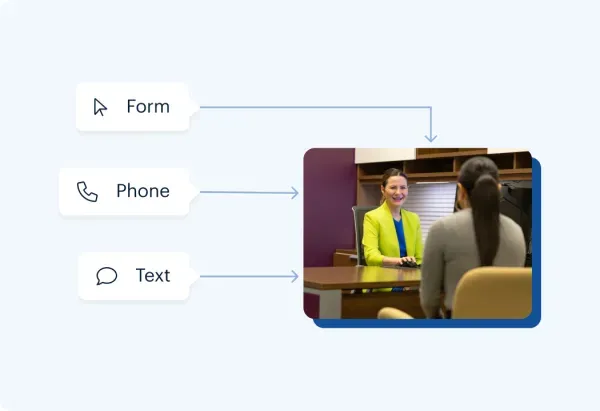
Contact Us 24/7 - It’s Free
Start your claim
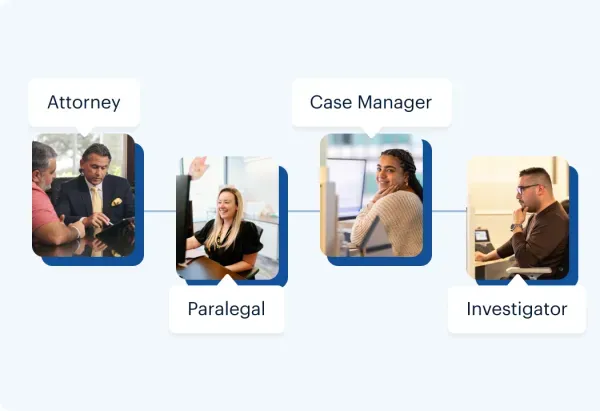
Meet your dedicated attorney
Meet the attorneys

We fight for more
Learn more about the case process
Results may vary depending on your particular facts and legal circumstances. The attorneys shown in these photos may not be licensed in your state. To find an attorney licensed in your area, please visit our attorney page.
Local Care
Backed by America’s Largest Injury Law Firm.
- $35 BillionRecovered for clients
nationwide - 700,000+Clients and families
served - 1,100+Attorneys across
the country - 1Click may change your life
We know your pain.
John Morgan’s brother Tim was injured as a teen. Their experience with a lawyer was a nightmare. John spent 35 years building a firm to do better for families like his. And yours.

The attorney featured above is licensed in Florida. For a full list of attorneys in your state please visit our attorney page.
Results may vary depending on your particular facts and legal circumstances.
Learn More
Injured and not sure what to do next?
We'll guide you through everything you need to know.
