Results may vary depending on your particular facts and legal circumstances. The attorney featured above is licensed in Florida. For a full list of attorneys in your state please visit our attorney page.
MEDICAL MALPRACTICE LAWYER IN TAMPA
Medical negligence that leads to infection, prolonged suffering, or additional surgeries in Tampa creates grounds for a malpractice claim. Morgan & Morgan reviews these cases with experienced legal and medical insight.
Results may vary depending on your particular facts and legal circumstances. The attorney featured above is licensed in Florida. For a full list of attorneys in your state please visit our attorney page.




















Medical Malpractice Attorney in Tampa
When you place your trust in a doctor, hospital, or other healthcare provider, you expect competent and careful treatment.
Unfortunately, medical mistakes are more common than most people realize, and when they happen, the results can be devastating. Misdiagnosis, surgical errors, medication mistakes, and hospital negligence can lead to lifelong injuries or even death.
At Morgan & Morgan, our Tampa medical malpractice attorneys fight for patients and families harmed by negligent medical care. We work with top medical experts to uncover what went wrong, determine who is responsible, and pursue the maximum compensation available under Florida law. With over $35 billion recovered for clients nationwide, our firm has the experience and resources to take on hospitals, physicians, and insurance companies and win.
If you or a loved one suffered due to a healthcare provider’s negligence, you deserve answers and justice. Contact Morgan & Morgan today for a free, no-obligation case evaluation, and let our Tampa medical malpractice lawyers fight to hold negligent providers accountable and secure the compensation you need to move forward.
150,000+ Five Star Reviews
The reasons why clients trust Morgan & Morgan.






Results may vary depending on your particular facts and legal circumstances. Based on select nationwide reviews.
How do I know if I have a medical malpractice claim in Tampa, Florida?
Medical malpractice may occur in many healthcare settings, including hospitals, emergency rooms, physicians’ offices, rehabilitation centers, outpatient surgery centers, dialysis clinics, skilled nursing facilities, and patients’ homes when home healthcare services are provided.
A claim may involve care provided by physicians, nurses, advanced practice registered nurses, physician assistants, radiology technicians, therapists, mental health counselors, and other licensed healthcare professionals. To establish a medical malpractice claim, you generally must prove four elements:
Duty of Care
A healthcare provider owes a duty of care when they agree to treat a patient. This requires the provider to act as a reasonably careful healthcare professional would under similar circumstances, commonly referred to as the standard of care.
Breach of Duty
A breach occurs when the provider fails to meet the applicable standard of care. This may involve taking an action that a reasonably careful provider would not have taken or failing to take an action that should have been performed.
Causation
You must show that the provider’s breach caused or contributed to an injury, loss, or death. Causation can be one of the most challenging elements to establish because a poor medical outcome is not always the result of negligence.
Damages
You must also have suffered measurable harm because of the malpractice. Potential damages may include lost wages, reduced future earnings, past and future medical expenses, pain and suffering, mental anguish, loss of enjoyment of life, and loss of companionship or services.
A medical malpractice attorney can review the circumstances, determine whether these elements may be present, and explain how Florida law could apply to your case.
What should I do if I suspect medical malpractice in Tampa, Florida?
If you believe a healthcare provider’s mistake caused you harm, your health and safety should come first. Seek care from another medical professional as soon as possible for a second opinion, further evaluation, or additional treatment. Explain your concerns and provide as much information as you can about your prior care, symptoms, and current condition.
You should also begin collecting records related to your treatment, including hospital records, physicians’ notes, prescriptions, test results, discharge instructions, and imaging records. Obtaining a complete copy of your medical records can take time, so it may be helpful to request them promptly. Keep a written timeline of important dates, conversations, symptoms, and changes in your condition, and photograph any visible injuries when appropriate.
After addressing your immediate medical needs, consider speaking with a medical malpractice attorney about your legal options. These claims can be complex and often require a detailed review of medical records, input from qualified experts, and evidence showing how the provider’s actions caused your injuries.
Morgan & Morgan offers free case evaluations for individuals who believe they may have been harmed by medical negligence. With more than 1,100 attorneys nationwide and decades of experience handling complex injury cases, our team can review your situation and help you understand whether you may have a valid claim in Tampa, Florida.
What types of evidence are needed to prove medical malpractice in Tampa, Florida?
To establish medical malpractice, a patient generally must present evidence showing that a healthcare provider failed to meet the applicable standard of care and that this failure caused an injury, loss, or death.
Medical Records
Medical records are often key evidence in a malpractice claim. They may contain details about the patient’s medical history, symptoms, diagnoses, medications, test results, procedures, and course of treatment.
These records can help reveal potential mistakes or deviations from the standard of care, including a missed diagnosis, improper procedure, medication error, or delay in treatment.
Expert Testimony
Qualified medical experts often play an important role in explaining whether the healthcare provider acted as a reasonably careful professional would have under similar circumstances.
An expert may review the records, explain complex medical issues, identify a potential breach of the standard of care, and offer an opinion about whether the provider’s actions or omissions caused the patient’s injuries.
Evidence of a Provider-Patient Relationship
You generally must establish that the healthcare provider agreed to provide you with care or treatment. This provider-patient relationship creates a legal duty to meet the applicable standard of care.
Evidence of Causation and Damages
It is not enough to show that a medical mistake occurred. You must also connect the provider’s negligence to the harm you suffered. Medical records, expert opinions, bills, employment records, and other documentation may help establish causation and demonstrate the resulting damages.
A medical malpractice attorney can gather and review this evidence, consult qualified experts, and determine whether the circumstances may support a claim under Florida law.
Can I sue a hospital for medical malpractice in Tampa, Florida?
Yes. A hospital may be held liable for medical malpractice when its own negligence contributed to a patient’s injury. This may include inadequate staffing, negligent hiring or credentialing practices, unsafe policies, or defective equipment.
However, liability may be more complicated when the healthcare provider responsible for the harm was an independent contractor rather than a hospital employee. In those situations, responsibility may rest with the individual provider or another party.
Can I sue for medical malpractice if the error did not cause permanent injury in Tampa, Florida?
Yes. A medical malpractice claim may still be possible even if the injury was not permanent, as long as the healthcare provider’s negligence caused measurable harm. You may be able to seek compensation for medical expenses, additional treatment, pain and suffering, lost income, and other related damages.
If a medical error caused unnecessary harm or additional costs, Morgan & Morgan may be able to help you understand your legal options. Contact us for a free case evaluation.
How long do I have to file a medical malpractice claim in Tampa, Florida?
There are legal time limits that determine how long an injured person has to file a medical malpractice lawsuit. These deadlines are known as statutes of limitations.
The deadline for filing a medical malpractice claim varies by state and may depend on factors such as when the malpractice occurred, when the injury was discovered, and the parties involved. Some states also impose a statute of repose, which may create a final deadline for bringing a lawsuit regardless of when the injury was discovered.
Because these deadlines can vary and exceptions may apply in certain situations, it is important to speak with an attorney as soon as possible if you suspect medical malpractice. Waiting too long could affect your ability to pursue compensation.
How long does it take to resolve a medical malpractice claim in Tampa, Florida?
The time it takes to resolve a medical malpractice lawsuit can vary widely depending on several factors, including the complexity of the case, the severity of injuries, and the willingness of the parties to settle.
Unlike many other types of law, medical malpractice cases nearly always require litigation. While most cases settle without the need for trial, at Morgan & Morgan, we approach every case as if it will require trial to resolve, as there is no way to predict which ones will require trial. While the complexity of some cases often requires years of litigation, our goal is always to apply maximum effort and resources toward resolving your case and maximizing your recovery. We try to do that as expeditiously as possible.
What’s the process for settling a medical malpractice case out of court in Tampa, Florida?
Settling a medical malpractice case out of court generally involves several steps intended to resolve the dispute without a trial. These may include:
- Demand letter: Your attorney sends a written demand to the healthcare provider, hospital, insurer, or other responsible party outlining the claim, the injuries involved, and the compensation being sought.
- Negotiations: The parties exchange information and discuss a possible resolution. Mediation or another form of alternative dispute resolution may also be used to help reach an agreement.
- Settlement agreement: If the parties agree on the terms, they sign a settlement agreement. Once the payment and other requirements are completed, the claim is typically resolved without going to trial.
Although the settlement process can be complex, it may be faster and less stressful than litigation. It also allows both sides to maintain greater control over the outcome rather than leaving the decision to a judge or jury.
Morgan & Morgan’s medical malpractice attorneys are prepared to negotiate for fair compensation and take a case to trial when an acceptable settlement cannot be reached.
What should I expect during a medical malpractice trial in Tampa, Florida?
A medical malpractice trial is a formal court proceeding in which a judge or jury reviews the evidence and decides whether a healthcare provider’s negligence caused the patient’s injuries. These trials can be lengthy, sometimes lasting several weeks, and may involve substantial costs. That is why we will always make every effort to resolve your case without the need for a trial, while always being prepared to take your case to trial if it comes to that.
Jury Selection
If the trial involves a jury, the process begins with jury selection (voir dire). Attorneys from both sides question potential jurors to determine any biases or conflicts of interest that could affect their impartiality.
The goal is to assemble a fair and unbiased jury that will objectively evaluate the evidence presented.
Opening Statements
The plaintiff’s attorney presents the case overview, explaining the alleged medical negligence and how it caused harm to the patient. This sets the stage for the evidence that will be presented.
The defense attorney responds with their perspective, outlining why they believe the healthcare provider was not negligent or that the negligence did not cause harm.
Presentation of Evidence and Witness Testimony
The plaintiff presents evidence supporting the claim, which may include medical records, witness statements, and expert testimony. Medical experts often play an essential role by explaining how the healthcare provider failed to meet the applicable standard of care and how that failure caused the patient’s injuries. The defense will cross-examine the plaintiff’s witnesses to challenge their credibility, the validity of their testimony, or the conclusions drawn.
The defense then presents its evidence, which may include expert witnesses who argue that the standard of care was met or that other factors caused the injury. The plaintiff’s attorney will cross-examine the defense witnesses to highlight inconsistencies or weaknesses in their arguments.
Rebuttal
The plaintiff may introduce rebuttal evidence to challenge the defense’s arguments. This allows the plaintiff to respond to specific issues raised through the defense’s evidence or witness testimony.
Closing Arguments
The plaintiff’s attorney summarizes the case, emphasizing the key evidence and testimony that support the claim of negligence. The defense attorney responds, highlighting the lack of evidence or alternative explanations for the injury.
Each side uses this opportunity to persuade the jury or judge of their position and clarify the most compelling aspects of their case.
Jury Deliberation
The jury considers the evidence and arguments in private before reaching a verdict. In many cases, the decision must be unanimous, although some jurisdictions permit a verdict based on a qualified majority.
Verdict
The jury delivers a verdict determining whether the healthcare provider was negligent and, if so, how much compensation should be awarded to the plaintiff.
The verdict may favor the plaintiff and include an award of damages, or it may favor the defense and find that the healthcare provider is not liable.
Post-Trial Motions and Appeals
After the verdict, either party may file post-trial motions, such as a request for a new trial or a modification of the judgment, if they believe errors occurred during the proceedings.
The losing party may also file an appeal if they believe a legal error affected the outcome. An appellate court generally reviews how the law was applied and whether the trial was conducted fairly rather than reconsidering the facts of the case.
What's the role of expert witnesses in medical malpractice cases in Tampa, Florida?
An expert witness plays a crucial role in medical malpractice cases, serving as a key component in establishing whether a healthcare provider acted negligently. Their expertise helps clarify complex medical issues for the judge, jury, and attorneys, making their testimony often pivotal to the outcome of the case.
They can help to establish the standard of care, prove negligence, explain medical concepts, interpret evidence, provide objective opinions, testify in court, rebut defense claims, and even assist in settlement negotiations.
What are the most common defenses against medical malpractice claims?
Medical malpractice cases can be complex, and doctors, hospitals, and other healthcare providers may raise several defenses to challenge allegations of negligence. Common defenses include:
- The standard of care was met: The provider may argue that the treatment was consistent with what a reasonably careful healthcare professional would have provided under similar circumstances.
- The alleged negligence did not cause the injury: The defense may claim that the patient’s condition or harm resulted from an underlying illness, an unavoidable complication, or another cause unrelated to the provider’s actions.
- The patient contributed to the harm: Depending on the laws that apply, the defense may argue that the patient’s conduct contributed to the injury. Examples may include failing to provide an accurate medical history, missing follow-up appointments, not taking medication as directed, or delaying medical care after symptoms appeared.
- The patient gave informed consent: A provider may argue that the patient was properly informed of the known risks and voluntarily chose to proceed with the treatment or procedure.
- The statute of limitations expired: The defense may contend that the patient failed to file the claim within the applicable legal deadline.
Understanding these potential defenses can help patients and their attorneys anticipate the arguments that may arise and develop evidence to address them. An experienced medical malpractice attorney can evaluate the facts, consult qualified experts, and build a strategy for responding to these defenses.
What sort of compensation can I receive for a medical malpractice claim in Tampa, Florida?
If you file a medical malpractice claim, the compensation you may receive typically falls into three main categories: economic damages, non-economic damages, and, in some cases, punitive damages.
Economic Damages
These cover the quantifiable financial losses you’ve incurred as a result of the medical malpractice. They include:
- Past medical expenses: Reimbursement for past and current medical bills related to the malpractice, such as surgeries, hospital stays, medications, physical therapy, and assistive devices.
- Future medical expenses: The anticipated cost of future medical care, including surgeries, treatment, therapy, nursing services, attendant care, and any other care that is reasonably expected to be necessary.
- Lost wages: Compensation for income lost due to missed work while recovering.
- Loss of earning capacity: If the malpractice affects your ability to work in the future, you can receive compensation for reduced earning potential.
- Wrongful death damages: In the event that the malpractice results in the death of a patient, a surviving spouse and surviving children may be entitled to compensation for loss of monetary support and loss of household services that were provided by the deceased victim.
Non-Economic Damages
These compensate for the intangible losses you’ve suffered, which don't have a direct monetary value but significantly impact your quality of life. They may include:
- Pain and suffering: Physical pain and emotional distress caused by the malpractice.
- Mental anguish: Mental pain, illness, suffering, and/or disease caused by the malpractice.
- Loss of enjoyment of life: If the malpractice prevents you from engaging in hobbies, activities, or other aspects of life you previously enjoyed.
- Inconvenience: Any disruption of normal daily living that resulted from the malpractice, including having to travel to and from doctors, undergo therapy, rearrange lifestyles, etc.
- Disfigurement or disability: Compensation for permanent physical impairment or visible scars resulting from the malpractice.
Punitive Damages
Punitive damages are less common and are awarded to punish the healthcare provider for particularly reckless or egregious conduct. These damages are designed to deter similar behavior in the future.
State-Specific Caps
Some states place limits on non-economic damages in medical malpractice cases. These caps may restrict the amount available for losses such as pain and suffering, even when the injuries are severe.
Factors Influencing Compensation
The amount you may receive will depend on several factors, including:
- The extent and permanence of your injuries.
- The cost of future medical care and treatment.
- The degree of negligence demonstrated by the healthcare provider.
- The specific laws in your state regarding medical malpractice claims.
Is there a maximum amount that can be recovered in these claims in Tampa, Florida?
The amount available in a medical malpractice claim depends on the laws that apply and the specific circumstances of the case. Some states limit certain types of damages, particularly non-economic damages such as pain and suffering, while others do not impose the same restrictions.
Economic damages, including medical expenses, lost wages, and future care costs, may be treated differently. The potential value of a claim can also depend on the severity of the injuries, the long-term impact of the malpractice, and the available evidence.
A medical malpractice attorney can review your case and explain what types of compensation may be available.
What happens if a doctor loses a medical malpractice case in Tampa, Florida?
If a doctor is found liable in a medical malpractice case, they are usually not required to personally pay the full amount of the settlement or verdict. Compensation is typically paid by the doctor’s malpractice insurance carrier or by a self-insured hospital or healthcare organization.
A finding of malpractice may also be reported to the appropriate state medical licensing board. Depending on the circumstances, the physician could face professional discipline. However, license suspension or revocation is generally more likely in cases involving repeated violations, especially serious misconduct, or intentional wrongdoing.
How is medical malpractice different from other personal injury cases in Tampa, Florida?
Medical malpractice involves negligence by a healthcare provider, while personal injury claims may arise from many other incidents, such as car accidents or slip and falls. Medical malpractice cases generally require showing that the provider failed to meet the applicable standard of care, which can make these claims more complex and often requires testimony from qualified medical experts.
At Morgan & Morgan, we offer a free legal consultation for medical malpractice so you can learn more about the specifics of your case and what makes it distinctly medical malpractice.
How much does it cost to hire Morgan & Morgan in Tampa, Florida?
Morgan & Morgan handles medical malpractice cases on a contingency-fee basis, which means there are no upfront attorney’s fees. With our Fee Is Free™ promise, you only pay if we successfully recover compensation through a settlement or verdict. If your case is unsuccessful, you do not owe attorney’s fees.
We use this approach because everyone should have access to experienced legal representation, regardless of their financial circumstances. If you believe medical negligence caused your injuries, contact Morgan & Morgan for a free case evaluation to learn more about your legal options.
Do I have to pay for a consultation for my medical malpractice case in Tampa, Florida?
No. Morgan & Morgan offers free case evaluations, allowing you to discuss your potential medical malpractice claim without paying a consultation fee.
Getting started is simple. You can complete a free case evaluation through our website or contact Morgan & Morgan by phone to learn more about your legal options.
Who will be on my Tampa, Florida, case team?
When you hire Morgan & Morgan, you gain access to the resources of America’s Largest Injury Law Firm™. With more than 1,100 attorneys nationwide and over 700,000 clients helped, our firm has the experience and resources to handle complex medical malpractice cases.
Your case may be supported by a dedicated team that can include attorneys, paralegals, case managers, and other legal professionals working together to move your claim forward. You may also have a primary point of contact who can help answer questions and keep you updated throughout the legal process.
Can I switch to a different lawyer during my case?
Yes. You generally have the right to change attorneys at any stage of a medical malpractice case if you are dissatisfied with your current representation. Before making the switch, consider any potential financial obligations and whether the new attorney has the experience and resources to take over your case effectively.
Morgan & Morgan offers free case evaluations to discuss whether transferring your case may be an option. You can contact us at any time to speak with a hospital negligence attorney at no cost or obligation.
Why should I hire Morgan & Morgan in Tampa, Florida, for my medical malpractice claim?
Medical malpractice cases are often complex, requiring extensive evidence, expert testimony, and significant legal resources. Morgan & Morgan has more than 1,100 attorneys nationwide and has recovered over $35 for clients.
Many of our medical malpractice attorneys previously represented physicians, nurses, hospitals, and liability insurers before dedicating their careers to helping injured patients and their families. That background provides valuable insight into how healthcare providers and insurance companies may evaluate, defend, and respond to malpractice claims.
Morgan & Morgan’s attorneys are committed to pursuing accountability when preventable medical errors cause harm. We work with respected medical experts to evaluate claims and help families understand their legal options. Fill out a free case evaluation to learn more about your legal options.
Our Results
How It Works
Unsure what to do next? With 35 years of experience, our personal
injury lawyers will guide you every step of the way.

Contact Us 24/7 - It’s Free
Start your claim
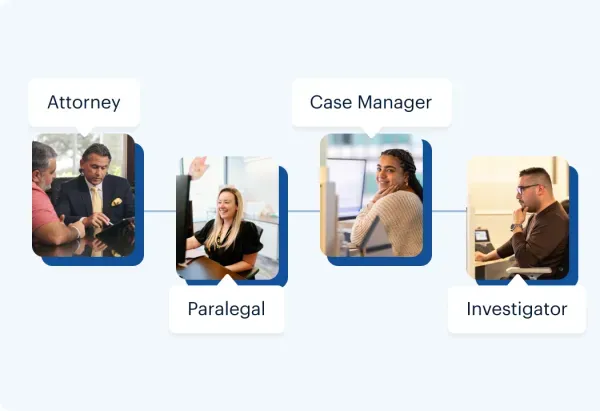
Meet your dedicated attorney
Meet the attorneys

We fight for more
Learn more about the case process
Results may vary depending on your particular facts and legal circumstances. The attorneys shown in these photos may not be licensed in your state. To find an attorney licensed in your area, please visit our attorney page.
Ways We Can Help

Injured in a car accident?

Hurt in a slip and fall?

Injured on the job?
See our Tampa Case Types:
Learn more
Local Care
Backed by America’s Largest Injury Law Firm.
- $35 BillionRecovered for clients
nationwide - 700,000+Clients and families
served - 1,100+Attorneys across
the country - 1Click may change your life
We know your pain.
John Morgan’s brother Tim was injured as a teen. Their experience with a lawyer was a nightmare. John spent 35 years building a firm to do better for families like his. And yours.

The attorney featured above is licensed in Florida. For a full list of attorneys in your state please visit our attorney page.
Results may vary depending on your particular facts and legal circumstances.
Learn More
Injured and not sure what to do next?
We'll guide you through everything you need to know.