Results may vary depending on your particular facts and legal circumstances. The attorney featured above is licensed in Florida. For a full list of attorneys in your state please visit our attorney page.
WRONGFUL DEATH LAWYER IN EVANSVILLE
When negligence takes a life in Evansville, surviving family members may have the right to file a wrongful death claim. Morgan & Morgan pursues accountability and compensation for funeral costs, lost income, and the emotional toll of your loss.
Results may vary depending on your particular facts and legal circumstances. The attorney featured above is licensed in Florida. For a full list of attorneys in your state please visit our attorney page.















Evansville, IN Wrongful Death
The death of a loved one can be deeply traumatic. While grieving is always difficult, it can feel even more devastating if the death was preventable. On top of this grief, you and your family may face serious financial repercussions — from funeral expenses to the loss of a primary wage-earner.
If you believe the death of a loved one was caused by recklessness or negligence, the Morgan & Morgan team in Evansville may be able to help. Our wrongful death attorneys have the experience and knowledge to fight for the compensation you deserve, including funeral expenses, medical expenses, lost wages, and more.
We know that filing a lawsuit may be the last thing on your mind right now. However, our Evansville attorneys can help you evaluate if you have grounds to file a wrongful death lawsuit — all at no cost to you. Fill out our free case evaluation form to learn more.
- 700,000+ clients Chose Morgan & Morgan Nationwide.
- $0 upfront Only pay if we win.
- Available 24/7 Get help anytime.
Wrongful Death Cases in Evansville Need Three Things
Another Party May Be Responsible
Your Family Suffered Losses
You Have the Legal Right to File
Talk to Our Team at No Cost
150,000+ Five Star Reviews
The reasons why clients trust Morgan & Morgan.





Results may vary depending on your particular facts and legal circumstances. Based on select nationwide reviews.
What is a wrongful death claim in Evansville, Indiana?
Losing a loved one unexpectedly can be overwhelming. When that loss results from another person’s or company’s careless, reckless, or wrongful actions, state law may allow surviving family members to pursue accountability and financial recovery.
In general, a wrongful death occurs when a person dies due to another party’s negligence, misconduct, or other wrongful conduct. These claims are governed by state wrongful death laws.
A wrongful death claim allows eligible surviving family members to seek compensation for both the financial impact of the loss and the loss of their relationship with the deceased.
To establish a wrongful death case in Evansville, an attorney typically must demonstrate:
- The defendant owed a duty of care
- That duty was breached
- The breach directly caused the death
- The surviving family members sustained legally recognized damages
Who may file the lawsuit, and how any compensation is distributed, is determined by the applicable state law.
What are the most common causes of wrongful death cases in Evansville?
Wrongful death claims can arise from a wide range of preventable incidents. While every case is different, certain types of fatal accidents occur more frequently than others. Common causes may include:
- Car accidents involving negligent or distracted drivers
- Pedestrian or bicycle collisions
- Commercial truck accidents
- Medical malpractice at hospitals or surgical centers
- Construction site and other workplace accidents
- Drownings in residential or public pools
- Premises liability incidents at businesses or apartment complexes
- Defective or dangerous products
- Nursing home neglect or abuse
- Fatal injuries resulting from violent or criminal acts
Each of these situations may give rise to a civil wrongful death claim, which is separate from any criminal charges that may also be filed.
What should I do if I suspect a wrongful death in Evansville, Indiana?
If you suspect a wrongful death, it’s important to take immediate action to protect your rights and build a strong case. Here are the key steps you should take:
Obtain a Death Certificate
The official death certificate will document the cause of death, which may be important for your case.
Gather Evidence
Collect any medical records, accident reports, photographs, witness statements, or other relevant documentation that could support your claim. If the death occurred in a workplace or medical setting, request records related to procedures, treatments, or safety violations.
Contact Morgan & Morgan
A wrongful death attorney can evaluate your case and guide you on the best course of action. They can also help determine liability and the compensation you may be entitled to.
Avoid Speaking With Insurance Companies Alone
Insurance companies may attempt to minimize your claim. Consult with your attorney before providing any statements.
Determine Who Can File a Claim
Who may file a wrongful death lawsuit depends on Indiana law. In most states, the claim is brought either by eligible surviving family members or by the personal representative of the deceased person’s estate on behalf of those beneficiaries.
The specific individuals who qualify, such as spouses, children, parents, or other dependents, are determined by the laws of the state where the claim is filed.
Be Aware of the Statute of Limitations
Each state has a specific deadline for filing a wrongful death claim. Indiana’s statute of limitations is strict, and missing this deadline could prevent you from pursuing legal action.
Consider the Financial and Emotional Impact
A wrongful death claim may allow recovery for losses such as medical expenses, funeral and burial costs, and lost financial support. Indiana law also permits certain damages for the loss of love, care, and companionship, depending on the circumstances. An attorney can help evaluate the types of economic and non-economic damages that may be available under Indiana law.
How do I know if I have a valid wrongful death case?
Determining whether you have a valid wrongful death case depends on several key legal factors. Here’s what you should consider:
Was there negligence or misconduct?
To have a wrongful death case, you must prove that someone else's negligence, recklessness, or other actions caused the death. This can include:
- Car accidents caused by a reckless driver
- Medical malpractice due to a doctor’s error
- Unsafe workplace conditions leading to a fatal accident
- Criminal acts, such as assault or homicide
Did the death result from that negligence?
There must be a direct link between the responsible party’s actions (or failure to act) and the death. For example, if a doctor misdiagnosed a treatable illness and the patient died as a result, that could establish a valid claim.
Do you have legal standing?
Only certain individuals are permitted to file a wrongful death lawsuit, and eligibility depends on state law. In most states, the claim may be brought either by eligible surviving family members or by the personal representative of the deceased’s estate on behalf of those beneficiaries.
Those who may qualify can include a surviving spouse, children, parents, or other financially dependent relatives, depending on the specific laws of the state.
Are there recoverable damages?
A valid wrongful death claim must involve legally recognized losses, which may include:
- Medical expenses incurred before death
- Funeral and burial costs
- Loss of financial support, including future earnings and benefits
- Loss of companionship, care, guidance, and support
The types of damages available depend on state law and the specific circumstances of the case.
Is it within the statute of limitations?
Each state has a deadline to file a wrongful death claim. If too much time has passed, you may lose the right to sue.
Who can file a wrongful death lawsuit in Evansville?
State law determines who is permitted to bring a wrongful death claim. In Indiana, these claims are typically filed by the personal representative of the deceased person’s estate on behalf of the surviving beneficiaries.
Those who may ultimately benefit from the claim can include a surviving spouse, children, parents, or other dependents, depending on the circumstances and how Indiana law applies.
If a personal representative has not yet been appointed, the probate court may allow one to be designated to pursue the claim on behalf of the estate and eligible survivors.
What is the statute of limitations in Evansville, Indiana?
Indiana law imposes strict deadlines for filing a wrongful death claim. In most cases, the time period begins running from the date of death, though certain circumstances can affect how the deadline is calculated.
Different rules may apply in cases involving:
- Medical malpractice
- Claims against government entities
- Delayed discovery of the cause of death
Because these deadlines are strictly enforced and missing them can permanently prevent recovery, it’s important to act promptly to protect your rights.
How does a wrongful death lawsuit differ from a criminal case?
A wrongful death lawsuit and a criminal case can arise from the same incident, but they serve different purposes and follow different legal standards.
Purpose
- Wrongful Death Lawsuit (Civil Case): Filed by eligible family members or the estate to seek financial compensation for legally recognized losses, such as medical expenses, funeral costs, and loss of financial support. The goal is monetary recovery, not punishment.
- Criminal Case: Prosecuted by the government to address violations of criminal law. The goal is punishment, which may include imprisonment, fines, or probation.
Burden of Proof
- Civil Case: The plaintiff must prove liability by a preponderance of the evidence (meaning it is more likely than not).
- Criminal Case: The prosecution must prove guilt beyond a reasonable doubt, a much higher standard.
Who Brings the Case
- Civil Case: Filed by surviving family members or the estate, depending on state law.
- Criminal Case: Filed by government prosecutors.
Possible Outcomes
- Civil Case: May result in a financial award for the family.
- Criminal Case: May result in criminal penalties, such as incarceration or fines.
Can both happen at the same time?
Yes. A civil wrongful death claim can proceed independently of any criminal charges related to the same incident.
What is the difference between wrongful death lawsuits and survival actions?
A wrongful death lawsuit and a survival action are both legal claims that may arise when someone dies because of another party’s negligence, but they serve different purposes.
A wrongful death claim seeks compensation for the losses suffered by surviving family members as a result of the death. These damages may include funeral and burial costs, loss of financial support, and loss of companionship or services, depending on state law. The focus is on the impact the death has on surviving beneficiaries.
A survival action, by contrast, is brought on behalf of the deceased person’s estate. It seeks damages the individual could have recovered had they lived, such as medical expenses, lost income, or other losses incurred between the time of injury and death. Rather than compensating the family’s loss, it continues the claim the deceased would have had.
The key distinction is timing and purpose. Wrongful death claims address losses suffered by survivors after the death, while survival actions address losses the deceased experienced before passing. In some jurisdictions, both claims may be pursued together.
What types of compensation are available in an Evansville wrongful death case?
In a wrongful death case, compensation (often referred to as damages) is intended to address legally recognized losses resulting from the death. The types of damages that may be available depend on Indiana law and the specific facts of the case.
Damages may include:
Economic losses
- Medical expenses incurred before death
- Funeral and burial costs
- Loss of financial support, including expected future income and benefits
- Loss of household services
Non-economic losses (where permitted by law)
- Loss of companionship, care, or guidance
- Loss of consortium
In certain cases involving particularly reckless or intentional conduct, additional damages may be available under applicable state law.
Because wrongful death laws vary by state, an attorney can review the details of the case to help determine which types of compensation may apply in your situation.
How is liability proven?
Proving liability in a wrongful death case requires showing that the defendant’s actions (or failure to act) legally caused the death. While the process can be complex, most cases focus on establishing negligence, recklessness, or intentional misconduct.
Establishing Negligence (or Other Legal Theories)
In many wrongful death cases, the plaintiff, typically an eligible family member or estate representative, must prove that the defendant failed to exercise reasonable care.
To establish negligence, the following elements are generally required:
- Duty of Care: The defendant owed a legal duty to the deceased. For example, drivers must operate vehicles safely, and medical professionals must provide competent care.
- Breach of Duty: The defendant failed to meet that standard of care.
- Causation: The breach was a substantial factor in causing the death.
- Damages: The death resulted in legally recognized losses.
Intentional or Reckless Conduct
If the defendant acted intentionally or with reckless disregard for safety, liability may be based on those legal theories rather than simple negligence. The plaintiff must still show that the conduct directly resulted in the death.
Evidence Used to Prove Liability
Establishing responsibility often involves gathering and presenting evidence, such as:
- Medical records
- Eyewitness testimony
- Expert analysis (medical, accident reconstruction, and economic experts)
- Police or incident reports
- Photographs or surveillance footage
Addressing Potential Defenses
Defendants may argue that the deceased was partially responsible for the incident. The effect of shared fault depends on state law, which may reduce or limit recovery in certain circumstances. Strong evidence and legal advocacy are essential to counter these arguments.
Legal Guidance Matters
Wrongful death cases can involve complex facts, multiple parties, and significant financial stakes. An experienced attorney can investigate the incident, preserve critical evidence, consult experts, and build a case designed to establish liability under applicable state law.
What is the role of an expert witness in a wrongful death case?
In a wrongful death case, an expert witness helps explain complex issues that are outside the common knowledge of the jury. Their role is to provide specialized knowledge that strengthens the case by supporting the plaintiff’s claims or refuting the defendant’s arguments. Expert witnesses are usually specialists in areas related to the case, such as medicine, accident reconstruction, or economics.
For example, a medical expert may testify about the cause of death, the severity of injuries, and how the defendant’s actions contributed to the fatal outcome. Similarly, an accident reconstruction expert may analyze available evidence to explain how an accident occurred and whether the defendant’s actions contributed to the death. By providing professional opinions based on their expertise, these witnesses help the jury better understand complex issues and make more informed decisions.
Does insurance play a role in wrongful death claims in Evansville, Indiana?
Yes, insurance can play a significant role in wrongful death claims. In many cases, the defendant (the person or entity responsible for the death) may have insurance coverage that could help compensate the surviving family members for their loss.
Here’s how insurance may be involved:
- Defendant's Insurance Coverage: If the defendant is insured (for example, in a car accident or workplace accident), their insurance policy may cover damages awarded in a wrongful death case. The insurance company will typically handle the defense and may offer a settlement to avoid going to trial. This can help survivors recover financial compensation more quickly.
- Life Insurance: If the deceased had a life insurance policy, the beneficiaries (such as the spouse, children, or other dependents) may be able to claim the death benefits. This is separate from a wrongful death lawsuit, but it can provide additional financial support.
- Employer’s Insurance: If the wrongful death occurred due to a work-related accident, the employer’s workers' compensation insurance may cover certain expenses, though it typically does not cover non-economic damages like pain and suffering. In some cases, a third-party lawsuit can be filed if another party’s negligence (outside of the employer) contributed to the death.
- Settlements: Often, insurance companies prefer to settle cases before going to trial to avoid the cost and risk of a lengthy legal battle. In wrongful death cases, insurance companies may offer a settlement to the family to compensate for medical bills, funeral expenses, and lost income.
Insurance plays a key role in providing compensation for wrongful death claims, whether through the defendant’s liability insurance, life insurance, or workers' compensation coverage. However, insurance coverage does not always cover all types of damages, and the amount of compensation available will depend on the specifics of the case.
You should also note that insurance companies typically fight aggressively, and legal representation levels the playing field.
Do I need a lawyer for a wrongful death claim?
While it’s not legally required to have a lawyer for a wrongful death claim, it is highly recommended. Wrongful death cases can be complex, involving legal procedures, evidence gathering, and negotiations with insurance companies or opposing parties. Having an experienced attorney can significantly improve your chances of securing fair compensation and navigating the legal process effectively.
Indiana’s wrongful death laws are strict and include specific guidelines for who can file a claim, what damages are available, and the statute of limitations. A lawyer ensures your claim follows all legal requirements.
Establishing that someone’s negligence or intentional actions caused the death also requires strong evidence, such as accident reports, medical records, expert testimony, and witness statements. Morgan & Morgan’s attorneys know how to build a solid case.
Plus, insurance companies often try to minimize payouts. They may encourage you to accept a lower settlement or dispute liability entirely. An attorney can negotiate on your behalf and help ensure your claim is properly evaluated and pursued.
If a settlement isn’t reached, your case may go to trial. Litigation involves filing legal documents, presenting evidence, and arguing your case in court. An experienced Evansville attorney at Morgan & Morgan can handle these complexities and advocate for your rights.
How much does it cost to hire Morgan & Morgan in Evansville?
Morgan & Morgan’s lawyers work on a contingency fee basis, meaning that there are no upfront fees or expenses until your case comes to a successful conclusion. That’s right—the Fee Is Free™, and you only pay if we win.
Our fee is a percentage of the settlement or verdict amount, ensuring we are motivated to achieve the best possible outcome for you.
When do I meet with my lawyer?
We love talking to our clients. You will primarily communicate with your Case Manager via telephone and email, and if you would like to speak directly with your attorney via telephone, we will make that happen by scheduling a call.
Who will handle my Evansville case?
When you hire Morgan & Morgan, you don’t just hire a lawyer; you hire the largest personal injury law firm in the country with an army of over 1,100 lawyers and offices in all 50 states and Washington, D.C.
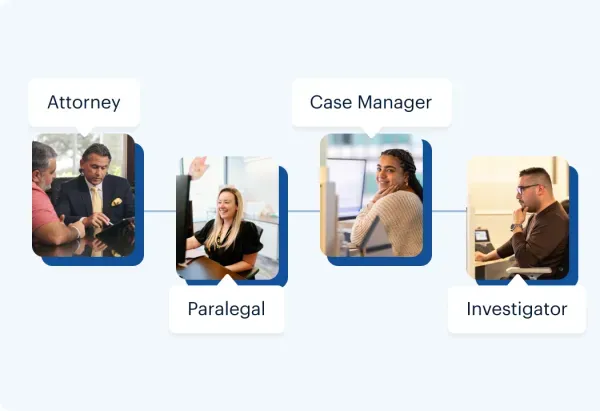
Your case will be handled by a dedicated team of professionals, including personal injury lawyers, paralegals, and support staff. You will be assigned a care team that includes a primary attorney who will oversee your case and ensure you receive personalized attention throughout the process.
Why should I choose Morgan & Morgan for an Evansville wrongful death case?
Wrongful death cases can be complex and emotionally difficult for families to navigate. Having experienced legal representation can help ensure the circumstances surrounding the death are thoroughly investigated and that any responsible parties are held accountable.
Morgan & Morgan is the largest personal injury law firm in the country, with more than 1,100 attorneys and over 35 years of experience representing injured individuals and their families. The firm has recovered more than $35 billion for those harmed by negligence and has the resources to pursue claims against individuals, corporations, and insurance companies.
With a presence in Indiana, Morgan & Morgan is familiar with local courts, procedures, and insurance practices, allowing us to represent families in Evansville and the surrounding areas effectively.
Morgan & Morgan works on a contingency fee basis, meaning the Fee Is Free™—you only pay if compensation is recovered. If you believe your loved one’s death may have been caused by negligence, you can start with a free case evaluation to learn more about your legal options.
Our Results
How It Works
Unsure what to do next? With 35 years of experience, our personal
injury lawyers will guide you every step of the way.

Contact Us 24/7 - It’s Free
Start your claim
Meet your dedicated attorney
Meet the attorneys

We fight for more
Learn more about the case process
Results may vary depending on your particular facts and legal circumstances. The attorneys shown in these photos may not be licensed in your state. To find an attorney licensed in your area, please visit our attorney page.
Local Care
Backed by America’s Largest Injury Law Firm.
- $35 BillionRecovered for clients
nationwide - 700,000+Clients and families
served - 1,100+Attorneys across
the country - 1Click may change your life
We know your pain.
John Morgan’s brother Tim was injured as a teen. Their experience with a lawyer was a nightmare. John spent 35 years building a firm to do better for families like his. And yours.

The attorney featured above is licensed in Florida. For a full list of attorneys in your state please visit our attorney page.
Results may vary depending on your particular facts and legal circumstances.
Learn More
Injured and not sure what to do next?
We'll guide you through everything you need to know.