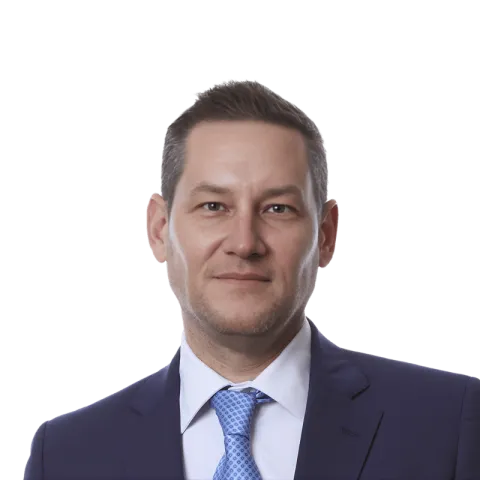
Results may vary depending on your particular facts and legal circumstances. The attorney featured above is licensed in Florida. For a full list of attorneys in your state please visit our attorney page.
ST. PETERSBURG MOTORCYCLE ACCIDENT ATTORNEY
Motorcycle crashes are rarely minor. When careless drivers cause collisions, riders often suffer catastrophic injuries that can alter the course of their lives. Our St. Petersburg motorcycle accident lawyers fight to hold negligent drivers accountable.
Results may vary depending on your particular facts and legal circumstances. The attorney featured above is licensed in Florida. For a full list of attorneys in your state please visit our attorney page.








St. Petersburg Motorcycle Accidents
With comfortable temperatures year round, Florida is one of the best states in the country to own a motorcycle. This is particularly true in St. Petersburg, a city so renowned for its weather that it is commonly referred to as the Sunshine City. However, it is also among the most dangerous cities in the state for motorcycle riding, with many accidents and injuries.
St. Petersburg is the largest city in Pinellas County, which ranked in the top four among all counties in the state for motorcycle crashes, injuries, and fatalities during 2014 and 2015, according to crash statistics from the Florida Department of Highway Safety and Motor Vehicles.
At Morgan & Morgan, our motorcycle accident attorneys in St. Petersburg have represented many riders that were injured during an accident and recovered compensation for medical bills, lost wages, among other damages on their behalf. If you or a loved one were injured in a motorcycle accident, contact us today for a free case evaluation to find out if we can also help you.
150,000+ Five Star Reviews
The reasons why clients trust Morgan & Morgan.



Results may vary depending on your particular facts and legal circumstances. Based on select nationwide reviews.
Why are motorcycle accidents so dangerous in St. Petersburg?
Motorcycles offer little protection in a collision. Even when riders wear helmets and protective gear, they remain vulnerable to the full force of impact.
Many motorcycle crashes happen not because riders are reckless, but because drivers fail to see them, misjudge distance, or violate traffic laws. A sudden lane change, left-hand turn, or moment of distraction can cause devastating consequences.
Unlike drivers in enclosed vehicles, motorcyclists often suffer direct trauma to the head, spine, and extremities, leading to long recovery periods or permanent disabilities.
What are the most common causes of motorcycle accidents in St. Petersburg?
Most motorcycle accidents are preventable and occur because other drivers fail to notice or properly react to motorcycles sharing the road. Common causes include:
- Drivers failing to yield while turning left at intersections: Left-turn collisions are one of the most dangerous scenarios for riders, often happening when drivers misjudge speed or overlook an oncoming motorcycle.
- Unsafe lane changes and blind-spot collisions: Motorcycles are smaller and easier to miss, especially when drivers fail to check mirrors or signal before changing lanes.
- Distracted driving, including phone use: Even a moment of distraction can be deadly when a driver fails to see a rider slowing, stopping, or riding alongside traffic.
- Following too closely: Tailgating leaves little room for reaction, and motorcycles can stop more quickly than cars, increasing rear-end crash risk.
- Speeding and aggressive driving: Excessive speed reduces reaction time and increases impact force, often leading to severe or fatal injuries for riders.
- Road hazards: Debris, potholes, uneven pavement, slick surfaces, or construction zones pose far greater dangers to motorcycles than to passenger vehicles.
Motorcycle crashes are frequently caused by driver negligence, not reckless riding. When motorists fail to share the road responsibly, riders are often the ones who suffer the most serious consequences.
What types of injuries are common in motorcycle accidents?
Because motorcycles offer little physical protection in a crash, riders are far more vulnerable to catastrophic injuries. Even collisions at moderate speeds can result in life-altering harm, including:
- Traumatic brain injuries (TBIs) and concussions: Head injuries can affect memory, cognition, personality, and independence, even when a helmet is worn.
- Spinal cord, back, and neck injuries: Damage to the spine can lead to chronic pain, limited mobility, or permanent paralysis.
- Broken bones and crushed limbs: Arms, legs, wrists, and hips are especially vulnerable, often requiring surgical repair and lengthy recovery.
- Road rash and severe soft-tissue injuries: Deep abrasions can cause infection, nerve damage, and permanent scarring.
- Internal organ injuries: Trauma to the chest or abdomen may result in internal bleeding or damage to vital organs that isn’t immediately visible.
- Permanent disfigurement or amputation: Some riders face lifelong physical and emotional consequences that affect every aspect of daily life.
These injuries often require emergency care, multiple surgeries, rehabilitation, and long-term medical support, placing enormous emotional and financial strain on injured riders and their families.
In the most tragic cases, motorcycle accidents result in fatal injuries. When a rider loses their life due to another driver’s negligence, surviving family members may be left grieving while also facing unexpected medical bills, funeral expenses, and the loss of future financial support. Wrongful death claims can never undo the loss, but they can help families seek accountability and financial stability during an incredibly painful time.
What should I do after a motorcycle accident in St. Petersburg, Florida?
Taking the right steps early can protect both your health and your claim:
- Seek immediate medical care, even if injuries seem manageable
- Call the police and ensure an accident report is filed
- Photograph the scene, vehicles, road conditions, and injuries
- Gather witness contact information
- Avoid discussing fault or giving recorded statements to insurers
Medical documentation created right away often becomes critical evidence in motorcycle injury claims.
How does Florida’s helmet law affect a motorcycle accident claim?
Florida law allows certain riders over 21 to ride without a helmet, but helmet use does not determine fault. Insurance companies often attempt to argue that injuries were worsened by helmet choice, but this does not excuse a driver’s negligence.
Helmet issues may affect damage arguments, but they do not eliminate your right to pursue compensation when another driver caused the crash.
Can I recover compensation if I was partly at fault?
Yes. Florida follows a modified comparative negligence system. This means you can still recover compensation as long as you are 50% or less at fault for the motorcycle accident. Your percentage of responsibility reduces any compensation you receive.
For example, if your total damages are valued at $100,000 and you are found 20% at fault, your recovery would be reduced by 20%, leaving $80,000 available.
In motorcycle cases, insurance companies frequently try to place disproportionate blame on riders, arguing that they were speeding, riding aggressively, or “harder to see.” These assumptions are often unfair and unsupported by evidence. Accident reconstruction, witness statements, traffic footage, and vehicle damage analysis are critical tools for challenging exaggerated fault claims and protecting your right to recover compensation.
Even when the fault is disputed, partial responsibility does not automatically bar a claim. A thorough investigation can make a meaningful difference in how fault is assigned and how much compensation remains available.
What if the driver who hit me was uninsured or underinsured?
If the driver who caused your motorcycle accident does not carry insurance or does not have enough coverage to compensate you fully, you may still have important options available.
In many cases, recovery may come through:
- Uninsured/underinsured motorist (UM/UIM) coverage, which is designed to step in when the at-fault driver cannot pay
- Other applicable liability policies, depending on the circumstances of the crash, the vehicles involved, or third parties who may share responsibility
UM/UIM claims can be especially challenging. Even though this coverage is part of your own insurance policy, insurers often scrutinize these claims closely and may dispute the severity of injuries, the value of damages, or fault itself. Riders frequently face delays, low offers, or outright denials.
Because motorcycle injuries are often severe and costly, properly documenting medical care, proving fault, and identifying all available coverage sources is critical. Legal guidance can help ensure insurers apply the correct policies, follow the law, and fully honor the coverage you paid for, so you are not left absorbing the financial impact of someone else’s negligence.
What types of compensation are available after a motorcycle accident?
Depending on the case, compensation may include:
- Medical expenses and future treatment
- Lost income and reduced earning capacity
- Pain and suffering
- Emotional distress and trauma
- Disability or permanent impairment
- Property damage to your motorcycle
There is no “average” motorcycle accident settlement. Each claim depends on injury severity, long-term impact, insurance coverage, and fault determination.
How long do I have to file a motorcycle accident lawsuit in Florida?
Florida law sets deadlines for filing motorcycle accident lawsuits. While many timelines begin on the date of the crash, exceptions may apply for wrongful death claims, delayed injuries, or cases involving minors.
Acting early helps preserve evidence, secure witness statements, and protect your legal options.
Can family members file a wrongful death claim after a fatal motorcycle crash?
Yes. When a motorcycle accident results in death, surviving family members may be able to pursue a wrongful death claim. These cases may seek compensation for:
- Medical and funeral expenses
- Loss of financial support
- Loss of companionship and guidance
- Emotional pain and suffering
Wrongful death motorcycle cases are deeply personal and legally complex, requiring careful handling and thorough investigation.
Why should I choose Morgan & Morgan for a motorcycle accident case in St. Petersburg?
Motorcycle accident claims are not handled like typical car crash cases. Riders face unique bias, severe injuries, and aggressive insurance tactics.
At Morgan & Morgan, we bring 35 years of experience, $30 billion recovered for our clients, trial-ready resources, and a deep understanding of motorcycle injury cases. There are no upfront costs, and The Fee Is Free®; you only pay if compensation is recovered.
If you were injured in a motorcycle crash in St. Petersburg, you don’t have to face the aftermath alone. Fill out a free case evaluation today. Our team is ready to fight for accountability and the recovery you deserve.
Our Results
How It Works
Unsure what to do next? With 35 years of experience, our personal
injury lawyers will guide you every step of the way.

Contact Us 24/7 - It’s Free
Start your claim
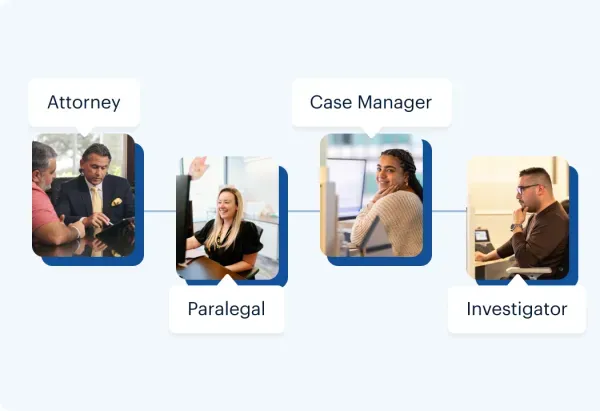
Meet your dedicated attorney
Meet the attorneys

We fight for more
Learn more about the case process
Results may vary depending on your particular facts and legal circumstances. The attorneys shown in these photos may not be licensed in your state. To find an attorney licensed in your area, please visit our attorney page.
Local Care
Backed by America’s Largest Injury Law Firm.
- $30 BillionRecovered for clients
nationwide - 700,000+Clients and families
served - 1,000+Attorneys across
the country - 1Click may change your life
We know your pain.
John Morgan’s brother Tim was injured as a teen. Their experience with a lawyer was a nightmare. John spent 35 years building a firm to do better for families like his. And yours.

The attorney featured above is licensed in Florida. For a full list of attorneys in your state please visit our attorney page.
Results may vary depending on your particular facts and legal circumstances.
Learn More
Injured and not sure what to do next?
We'll guide you through everything you need to know.